finance
Glasgow's Energy and Finance Sectors Feel the Chill as Tech Sell-Off Rattles Global Markets
A sharp drop on Wall Street and tumbling oil prices are casting a shadow over Glasgow's oil-services corridor and financial district, even as the FTSE 100 holds modestly higher.
How we reported this
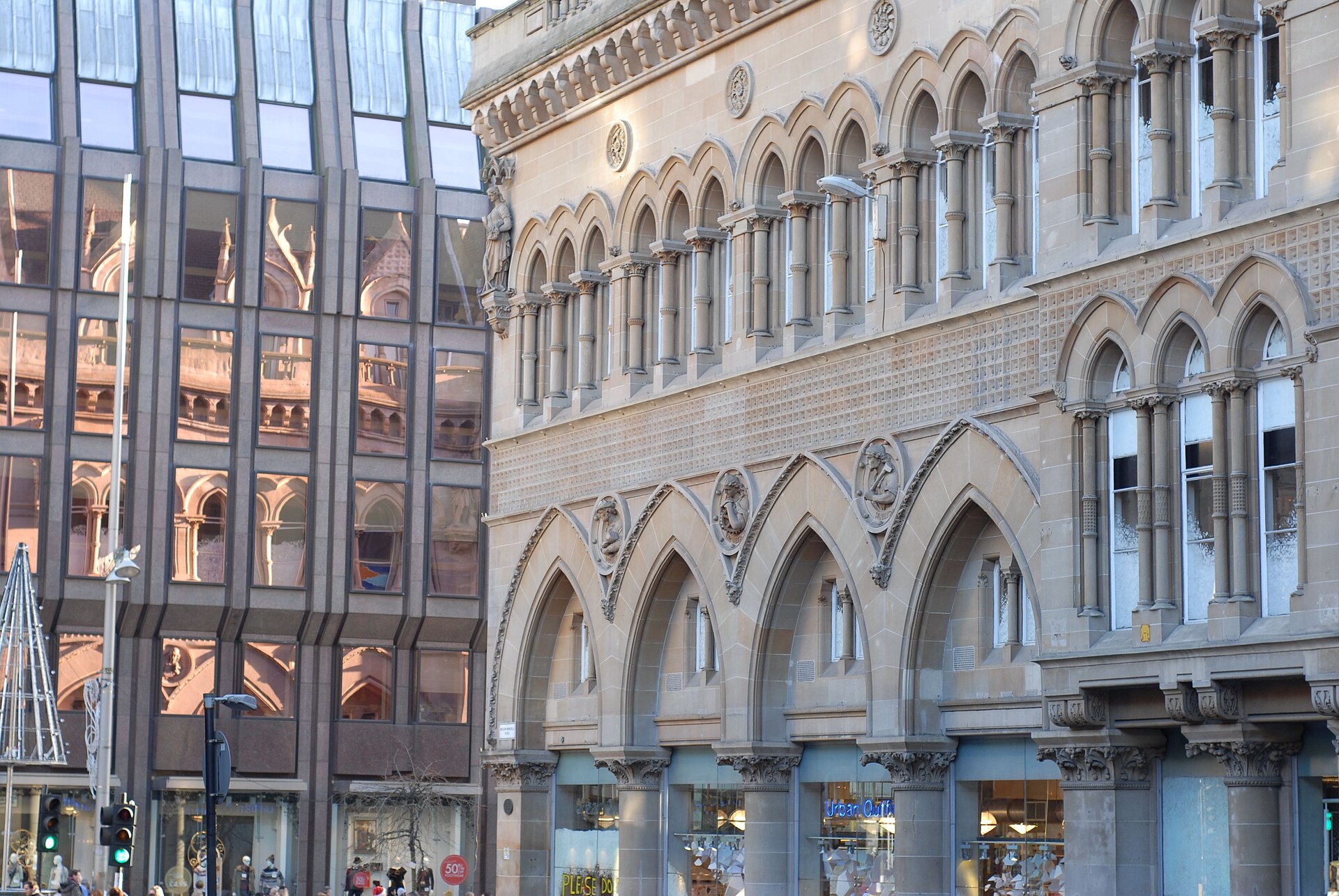
For a city whose economic fortunes remain tied to North Sea energy contracts, financial services on St Vincent Street, and a manufacturing base still finding its post-industrial footing, Thursday's market session delivered a complicated picture. The headline number for Glasgow workers and savers is a modest gain: the FTSE 100 rose 0.18% to 10,736.23. But look past that narrow green figure and the session tells a more unsettling story, one that touches directly on the industries that put wages in Glasgow pockets.
The sharpest signal came from the energy complex. Brent crude fell 3.76% to US$96.90 a barrel, while WTI crude dropped 2.84% to US$89.57. For Glasgow's substantial cluster of oil-field services companies, subsea engineering consultancies and the supply-chain businesses that feed them, sustained softness in crude pricing tends to translate, with a lag, into quieter order books and more cautious hiring. The city has spent years rebuilding confidence in that sector after the brutal 2015-2016 downturn, and sharp single-session moves in crude are never taken lightly here. Natural gas also slipped 0.75% to US$2.894, adding further pressure to an energy sector already navigating a complicated transition.
The global equity backdrop will also concern anyone in Glasgow with a pension, an ISA or savings in a workplace scheme with international exposure. In New York, the Nasdaq collapsed 2.90% to 24,944.68, its steepest single-session fall in the snapshot, dragging technology-heavy portfolios lower. The S&P 500 fell 1.31% to 7,400.47 and the Dow Jones shed 0.66% to 51,874.35. In Tokyo, the Nikkei 225 dropped 2.73% to 64,611.15, amplifying the risk-off mood across Asian sessions. The DAX in Frankfurt dipped 0.22% to 25,099, while Paris bucked the trend with the CAC 40 climbing 0.88% to 8,372.28, a reminder that European markets are not moving in lockstep.
Safe Havens and the Commodity Signals Glasgow Should Watch
Against that backdrop, the traditional flight to safety was only partial. Gold edged up 0.16% to US$4,053 an ounce, a muted response given the scale of equity losses, which suggests investors are not yet in full retreat mode. Silver performed more convincingly, rising 1.14% to US$58.455, and copper gained 0.51% to US$6.337 per pound. Copper's resilience matters to Glasgow because the metal is a practical barometer of industrial and construction demand; a city with significant infrastructure development ambitions and a manufacturing base supplying everything from renewables components to heavy engineering watches copper closely. Platinum slipped 0.22% to US$1,595.60, broadly in line with the cautious tone elsewhere.
In cryptocurrency markets, the session was uniformly weak. Bitcoin fell 1.39% to US$64,139.36, Ethereum dropped 0.94% to US$1,859.44, and Solana lost 2.60% to US$73.89. XRP declined 1.87% to US$1.0862. While digital assets remain a relatively small slice of most Scottish retail investor portfolios, the sector has grown as an employer in Glasgow's expanding fintech scene, and a prolonged crypto winter would eventually be felt in office take-up and graduate hiring in that part of the market. Dogecoin was the marginal outlier, edging up 0.04% to US$0.06916, though that figure is too small to read as a meaningful signal.
Across Asia, the Hang Seng managed a gain of 0.28% to 24,963.23, a sliver of positive news for Glasgow-based businesses with exposure to Chinese consumer markets or Asian supply chains. Singapore's Straits Times Index slipped 0.13% to 5,588.34, while Australia's All Ordinaries fell 0.70% to 8,941.50 and the ASX 200 dropped 0.57% to 8,772.30, keeping the broader Pacific region in negative territory.
The practical read for Glasgow households is this: the FTSE 100's small gain offers a degree of insulation for UK-focused pension funds and ISAs, but diversified portfolios with significant US or Asian technology exposure will have absorbed a rougher session. For those working in or supplying Glasgow's energy sector, the crude price slide is the figure worth monitoring most closely in the days ahead. As always, individual circumstances vary widely, this article is general market information only and does not constitute personal financial or investment advice. Anyone uncertain about how these moves affect their own position should seek guidance from a licensed financial adviser.